Custom Beer Steins for Beer Clubs & Mug Clubs: A Taproom Program Guide
A mug club is one of the cheapest, highest-return loyalty programs a taproom can run, and the stein itself is the whole mechanism. Mug club steins give a member a reason to come back weekly for a discounted fill, a shelf spot behind the bar that says ‘this is mine,’ and a keepsake that keeps the brewery’s name on a mantel long after the membership year ends. Get the stein and the program structure right, and it pays for itself in repeat visits within a season.
This guide covers which stein material fits a mug club budget and durability needs, the program elements that make members actually renew, and how to plan a numbered, branded run for your taproom.
Choosing a stein material for daily mug club use
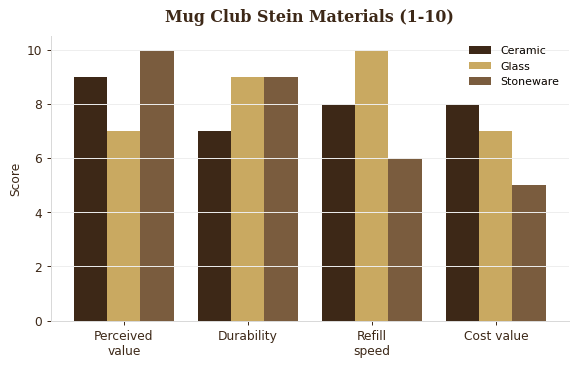
A mug club stein gets handled roughly — grabbed off a shelf, filled and refilled, occasionally dropped — so material choice is really a durability decision first and a look-and-feel decision second. Glass steins are the most durable under daily handling and the fastest to fill and rinse behind a busy bar, which matters when a taproom is turning members through on a Friday night.
Ceramic steins carry the most premium, old-world feel and take a crisp printed or embossed logo beautifully, making them the popular choice for a program that wants to feel like a real membership perk rather than a giveaway cup. Stoneware sits at the top for perceived value and heft but is the heaviest and priciest option, best reserved for a founding-member or lifetime tier. The chart compares the three on what mug club programs actually weigh.
Matching material to program tier
A standard annual mug club membership works well on glass or ceramic, both durable enough for weekly use and affordable enough to give away as part of the membership fee. Reserve stoneware or a heavier ceramic for a founding-member or lifetime tier where the extra cost signals real status on the shelf.
What makes a mug club program actually work
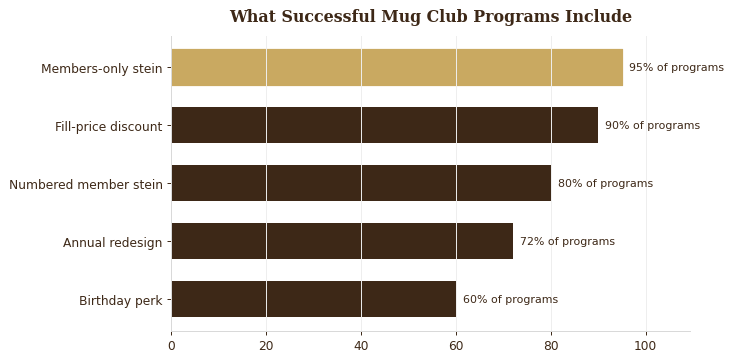
The stein gets people to sign up; strong mug club steins and the program structure around them are what get people to renew. A discounted fill price is the core incentive — members need to feel the math pays off within a handful of visits. A numbered stein, hung on a labeled hook behind the bar, adds a visible sense of belonging that a plain cup can’t match, and it turns the wall of steins into a piece of taproom decor that new visitors ask about.
Small perks extend the loyalty beyond the fill discount: a birthday-month free pour, an annual design refresh members can collect, or first access to limited releases. None of these need to be expensive — they need to be consistent enough that members plan a visit around them. The chart shows how common each element is across programs that report strong renewal rates.
Planning a numbered, branded stein run
The table below is a simple structure for a first-year mug club order, scaled by taproom size, with guidance on numbering and personalization.
| Program size | Suggested stein | Personalization |
|---|---|---|
| Small taproom (under 100 members) | Ceramic, hand-numbered | Member number + brewery mark |
| Established taproom (100–400) | Glass or ceramic, batch-numbered | Number + logo, annual color |
| Multi-location brewery | Standardized glass across sites | Location code + number |
Order a modest overage above your expected membership so a mid-year sign-up doesn’t wait for a reorder, and lock the numbering scheme before the first batch ships. For engraving and print methods that survive a dishwasher and daily handling, see our companion Engraving Styles for Beer Steins: Deep-Etch vs Laser vs Relief, and browse stein styles across our custom beer steins range, or read our heritage to see how other taprooms have built their programs.
Handling the operational side of a mug club program
The stein is the visible part of a mug club, but the back-of-house system is what keeps the program running smoothly once membership grows past a few dozen people. A simple numbered rack or labeled hook system behind the bar lets staff find and return a member’s stein in seconds, which matters during a rush when a slow member lookup creates a line. Some taprooms pair the physical stein number with a point-of-sale note so the discounted fill applies automatically rather than relying on staff memory.
Renewal logistics deserve as much planning as the initial sign-up. Decide early whether membership expires annually and requires a physical renewal (a new sticker, a redesigned stein, or a fresh number) or runs indefinitely once purchased. An annual model gives you a natural yearly reorder point and a reason to refresh the design, which keeps the wall of steins visually interesting over multiple years rather than static. A lifetime model is simpler to administer but removes that built-in reorder and redesign opportunity.
Staff training is the detail that’s easiest to skip and most likely to undermine the whole program. A mug club only feels special if every bartender treats it consistently — applying the discount without being asked, restocking the wall neatly, and greeting a regular by their stein rather than making them explain the program each visit. A short training note during onboarding, covering exactly how the program works and why it matters to retention, pays off far more than the stein itself.
Plan a design refresh cadence
Many strong mug club programs redesign the stein annually while keeping the core shape and material consistent, giving long-time members a reason to display multiple years side by side. Lock this decision before your first order so year-over-year artwork stays visually cohesive.
Marketing the program matters as much as designing it, and the taprooms that fill a mug club fastest treat the launch like a real event rather than a quiet menu addition. A dedicated sign-up night with a small perk for founding members, a social post showing the stein wall taking shape, and a short pitch trained staff can deliver at the register all drive faster early sign-ups than simply adding a line item to the menu and hoping regulars notice. Early momentum matters because a visibly filling wall of steins becomes its own marketing — new visitors ask about it, and existing members feel the pull of a growing, visible community they’re already part of.
Frequently asked questions
What stein material lasts longest in a mug club program?
Glass holds up best to daily fills, rinsing, and handling behind a busy bar. Ceramic is a close second and looks more premium; stoneware is the most durable but heaviest and priciest, best for a top membership tier.
Should mug club steins be numbered?
Numbering is one of the strongest drivers of renewal we see — it gives each member a specific, recognizable spot on the wall and a small sense of status that a generic cup doesn’t provide.
Building a mug club program?
Tell us your member count and we’ll design your stein for engraving, or contact us.