Beer Stein Care Guide: Cleaning, First Use, and Storage
A custom stein is meant to last decades, and good beer stein care is what gets it there. Whether you own a single engraved keepsake or manage a shelf of taproom steins, a few simple habits protect the artwork, the lid mechanism, and the surface finish. This guide covers first use, everyday cleaning by material, and storage so your steins look as good on their tenth anniversary as on day one.
The golden rule of beer stein care is gentle and consistent: warm water, mild soap, a soft touch, and thorough drying. Almost every problem — cloudy glass, tarnished pewter, a squeaky lid — traces back to a shortcut.
First use: what to do with a new stein
Before the first pour, rinse a new stein in warm water to clear any manufacturing or engraving residue. Skip harsh detergents; a quick rinse and dry is enough. If your stein has a pewter or metal lid, open and close it a few times to seat the hinge, and avoid submerging the lid assembly.
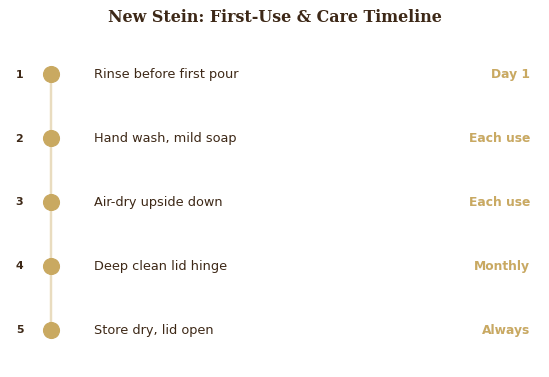
For stoneware and ceramic, a first rinse also removes any kiln dust. Give the piece a full air-dry before its first use so no moisture is trapped near the lid pin.
Everyday cleaning by material
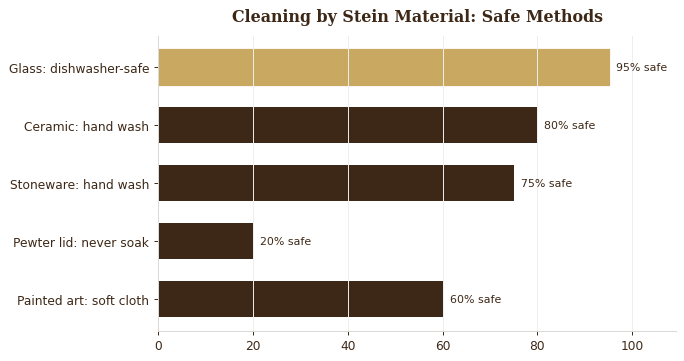
How you clean depends on what the stein is made of. Glass steins without metal parts are usually dishwasher-safe, but hand washing preserves engraving contrast longer. Ceramic and stoneware should be hand washed to protect glaze and relief. Never soak a pewter lid — it can spot and dull — and always dry it by hand.
Cleaning the lid and hinge
The lid hinge is the part most people forget. Once a month, wipe the hinge and thumb-lever with a barely damp cloth and dry immediately. A tiny amount of food-safe oil on a stubborn hinge keeps it swinging smoothly without gunk buildup.
Storage that protects the artwork
Store steins upright and dry, with lids propped slightly open so residual moisture escapes and the gasket does not compress. Keep them out of direct sunlight, which can fade painted art over time, and avoid stacking, which chips rims and scratches engraving.
| Task | How often | Why it matters |
|---|---|---|
| Rinse & hand-dry | Every use | Prevents film & odor |
| Wipe lid hinge | Monthly | Keeps lid smooth, spot-free |
| Deep clean | Seasonally | Removes buildup safely |
| Check storage | Ongoing | Protects art & rim |
Follow these habits and a custom stein stays display-ready for years. New to steins entirely? Start with our Glass vs Ceramic Beer Steins: Which to Engrave and Why comparison to choose the right material, and browse our custom beer steins to see what a custom order can look like.
What damages a stein — and how to prevent it
Most stein problems are avoidable once you know what causes them. Thermal shock is a common culprit: moving a stein straight from the freezer to hot dishwater, or pouring boiling liquid into a cold body, can crack glass and craze ceramic glaze. Let a stein return toward room temperature before big swings. Abrasion is the second offender; scouring pads and gritty cleansers leave micro-scratches that dull glass clarity and wear painted or printed art. The third is neglect of the lid mechanism, where moisture and residue seize hinges and tarnish pewter over time.
Good beer stein care is really just a set of small habits that head off those three problems. Wash by hand with a soft cloth, avoid extreme temperature swings, dry the metal parts immediately, and store with airflow. None of it takes more than a minute per use, and it is the difference between a stein that looks tired in a year and one that looks new in a decade.
Removing odors, stains, and hard-water film
Even with good habits, a well-used stein occasionally needs a reset. For lingering beer odor, fill the stein with warm water and a tablespoon of baking soda, let it sit for an hour, then rinse; the baking soda neutralizes smells without abrasion. For hard-water film or light mineral scale on glass, the white-vinegar-and-water wipe covered earlier works well, and for stubborn spots a soak of a few minutes loosens deposits so they wipe away without scrubbing.
Tannin or coffee-like staining inside ceramic responds to the same baking-soda soak. Whatever you use, keep acidic and abrasive treatments away from pewter lids and painted exteriors, and always finish with a clean-water rinse and a hand-dry. If a stein has a maker’s finish or gilding, test any treatment on a small area first.
Displaying and rotating a collection
If you own more than one stein, a little display discipline protects them. Keep steins out of direct sunlight, which fades painted art and can yellow some finishes over months. Give each piece a little space so lids and handles do not knock neighbors, and dust with a soft, dry cloth rather than a damp one that can sit in seams. For collectors who rotate pieces into use, a quick rinse before a long-stored stein’s next pour clears any settled dust.
For taprooms and bars that run branded steins through daily service, the same principles scale up: hand-wash lanes for lidded pieces, a no-freezer rule for glued or painted art, and a monthly hinge-and-rim check catch problems before they become breakage. Building these steps into closing routines keeps a branded set looking sharp through heavy use.
Common questions about beer stein care
Are any custom steins dishwasher-safe?
Plain glass steins without metal lids or applied art are often dishwasher-safe, but heat and detergent dull engraving contrast and can loosen glued components over time, so hand washing is the safest default for anything custom. Never put a pewter-lidded stein or a hand-painted piece in the dishwasher.
How do I clean and protect a pewter lid?
Wipe the lid with a soft, barely damp cloth and dry it immediately; never soak it. For light tarnish, a dedicated pewter polish used sparingly restores luster, but avoid harsh metal cleaners that can pit the surface. A monthly hinge wipe with a trace of food-safe oil keeps the lift smooth.
Can I drink hot beverages from a stein?
Stoneware and ceramic handle warm beverages better than glass, but avoid boiling liquids in any stein to prevent thermal shock, and keep hot contents away from glued art and lid gaskets. If a stein is intended as a display or collector piece, keep it to cold pours only.
How should I store steins long-term?
Store upright, dry, and out of sunlight, with lids propped slightly open so gaskets do not compress and moisture escapes. Avoid stacking, and if boxing steins away, wrap each in acid-free paper and keep the lid supported so the hinge is not bearing weight. Before a long-stored stein’s next pour, give it a quick warm-water rinse to clear any settled dust, and check the hinge still swings freely after months in the box.
Building a stein collection or gift order?
We’ll help you choose steins that are as easy to care for as they are to show off.