Beer Stein Materials Explained: Stoneware, Glass, Ceramic & Pewter
Few gifts carry as much weight — literally and sentimentally — as a well-made stein. But before you engrave a name or a crest, it pays to understand beer stein materials, because the material decides how the stein feels in the hand, how cold it keeps a pour, how crisply it takes an engraving, and how long it survives on a mantel. Choose well and you have an heirloom; choose poorly and you have a novelty mug.
This guide compares the four classic beer stein materials — stoneware, glass, ceramic, and pewter — so you can match the right one to your occasion, whether it’s a groomsmen set, a corporate service award, or a single keepsake.
The four classic beer stein materials
Stoneware — the Bavarian standard
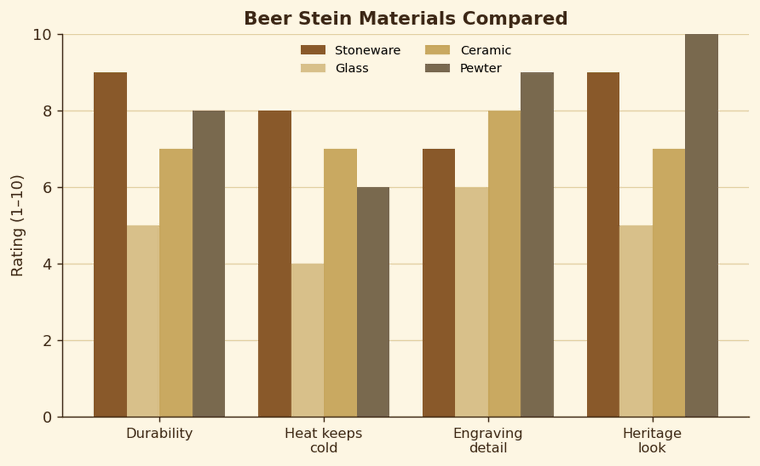
Fired at high temperatures, stoneware is dense, chip-resistant, and naturally insulating. It is the material most people picture when they think of a German beer hall. Its thick walls keep beer cold and its matte or salt-glazed surface suits both relief molding and engraving. If you want tradition and durability in one, stoneware is the default.
Glass — when the beer is the star
Glass steins (often with a hinged pewter lid) let drinkers admire color and clarity. They take crisp laser etching beautifully, which frosts the design into the surface. The trade-off: glass is the least insulating of the four and the most fragile, so it suits display and lighter use more than rowdy toasting.
Ceramic — the smooth all-rounder
Ceramic offers a smooth, glossy canvas ideal for full-color printing and detailed logos. It is lighter than stoneware and more affordable at volume, making it a favorite for corporate runs where brand color accuracy matters more than old-world texture.
Pewter — the heirloom showpiece
Pewter holds the deepest, most detailed engraving of any material and develops a handsome patina over decades. It is the most expensive and the most ceremonial — reserved for milestone awards and gifts meant to be handed down.
How the materials compare
The chart below rates each material on the factors buyers ask about most: durability, how well it keeps a pour cold, engraving detail, and that hard-to-fake heritage look.
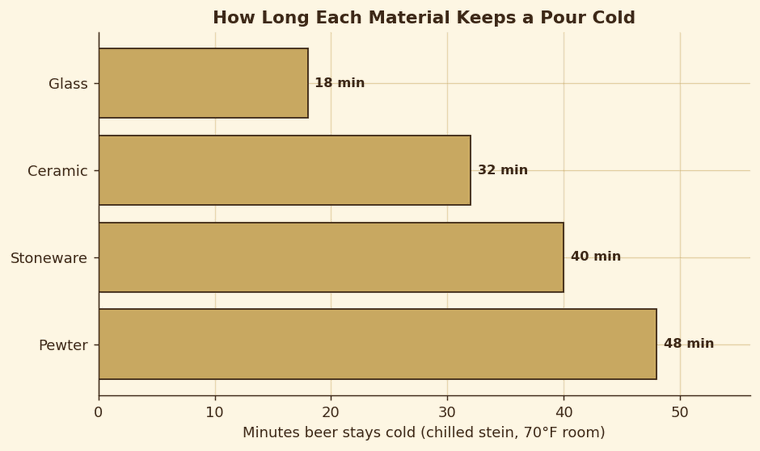
Temperature is where beer stein materials differ most visibly to the drinker. Thicker, denser materials hold the cold far longer — a real consideration for outdoor toasts and slow-sipping occasions.
| Material | Best for | Engraving style | Watch-out |
|---|---|---|---|
| Stoneware | Tradition, daily use, groomsmen | Relief + engraving | Heavier |
| Glass | Showing off the pour, display | Laser etch | Fragile, low insulation |
| Ceramic | Full-color corporate logos | Color print | Less heritage feel |
| Pewter | Heirloom awards, milestones | Deep engraving | Premium cost |
Matching material to occasion
For a groomsmen set you want durability and a classic feel — stoneware. For a corporate award honoring decades of service, pewter’s engraving and gravitas justify the cost. For a branded run where logo color is everything, ceramic prints cleanest. And for a gift to a craft-beer lover who wants to see the beer, glass wins. There is no single “best” material — only the right one for the moment, a theme we return to across our guides.
Pick stoneware, glass, ceramic or pewter and add your engraving.
Design Your Stein
Learn more about our workshop or read the rest of the stein journal.
Win Free Stuff
Enter below for a chance to win plus receive 10% off your first order.
🎉 You are in!
Check your email for your 10% off code. Good luck!