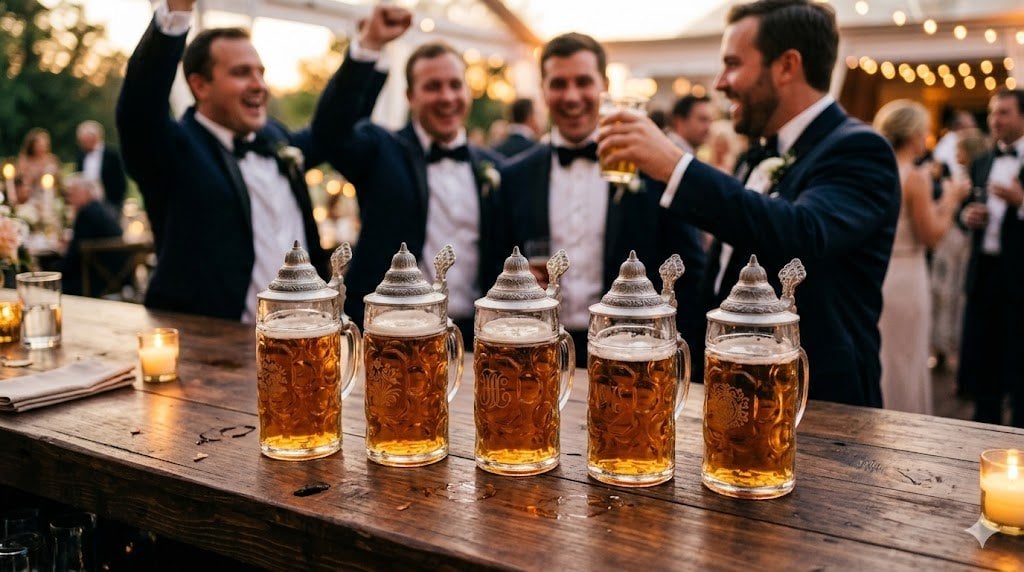
If you’ve been to more than a couple of weddings, you already know the routine. The groom hands out matching flasks at the rehearsal dinner, everyone grins for a photo, and within six months most of those flasks are buried in a sock drawer next to a tangled phone charger. There’s a better way to thank the people standing next to you on the biggest day of your life, and it’s been sitting in beer halls for about 500 years.
The Flask Problem Nobody Talks About
Flasks have a niche. They’re small, they’re discreet, and they’re occasionally useful at a tailgate. But for most groomsmen, that’s the entire use case. The leather peels, the engraving fades because it’s on a thin metal plate, and the inside picks up a metallic smell that’s almost impossible to clean out. Many grooms find that a few years after the wedding, the only flask still in regular rotation is the one belonging to the friend who genuinely drinks bourbon straight. For everyone else, it’s a memory wrapped in plated steel.
A gift’s real value isn’t what you paid for it. It’s how often it gets pulled out of the cabinet.
Why Steins Land Differently
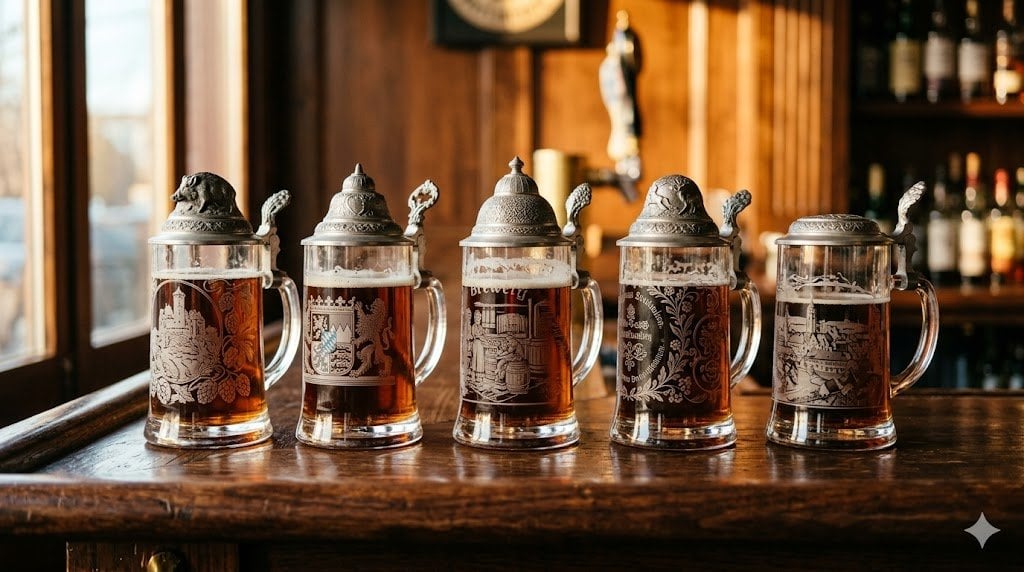
An engraved beer stein hits a different register. It’s substantial in the hand. It holds a full pint and then some, which is the actual volume most people drink. It looks great on a shelf when it’s not in use, so it doesn’t get exiled to storage. And because steins have a centuries-old association with celebration, friendship, and toasts, the symbolism actually matches what you’re trying to say to your groomsmen.
We’ve also noticed something practical: groomsmen who get steins tend to use them at home, at game nights, and at the next round of bachelor parties. The gift keeps circulating instead of getting shelved.
What to Engrave (Beyond the Obvious Initials)
The default is initials and a wedding date. That’s fine. But the steins guys actually brag about usually have something a little more personal. A few ideas that land well:
- The groomsman’s nickname, especially the one only the group uses
- An inside joke rendered as a fake coat of arms or motto
- The location and date of the wedding, plus a short toast line
- Each groomsman’s role (Best Man, Officiant, Ring Bearer Wrangler)
- A simple monogram on the front with the wedding details discreetly on the back
If you’re ordering for a larger party, mixing personalization across a consistent template keeps the set feeling cohesive without being identical.
Practical Considerations Before You Order
A few things to think about before you click order on a set of eight:
- Lead time. Custom engraving takes longer than stock retail. Order at least four to six weeks before you want them in hand, earlier if your wedding is in peak season.
- Sizing. Half-liter steins are the most versatile. Full-liter steins are impressive but a lot of glass to lift on a casual Tuesday.
- Lidded or open. Lidded steins look more traditional and travel better. Open mugs are easier to drink from at a party.
- Material. Glass is the most popular and shows off engraving cleanly. Ceramic feels more old-world. Pewter lids upgrade either one.
If you’re not sure where to start, our stein collection groups options by size, material, and lid style so you can compare quickly.
Budget vs Memorable: They’re Not the Same Thing
Many grooms try to keep groomsmen gifts under a specific number, which is reasonable. But a $30 flask that gets forgotten and a $55 stein that gets used for the next decade have very different cost-per-use math. When clients tell us they wish they’d done something different, it’s almost never “I wish I’d spent less.” It’s usually “I wish I’d picked something they’d actually keep.”
The same logic applies to engraving. Skipping personalization to save a few dollars per piece is the move that turns a thoughtful gift into a generic one.
Bringing It All Together
A wedding party is a thank-you list rendered in tuxedos. The gift should match that. Engraved steins are heavier, more memorable, and more useful than the alternative, and they age into the kind of object guys actually hand down. That’s a tall order for a piece of barware, but it’s the bar steins have cleared for centuries.