📞 Call or Text us: (929) 605-4397

Blog

  • 10 Occasions When a Custom-Engraved Beer Stein Makes the Perfect Gift

    10 Occasions When a Custom-Engraved Beer Stein Makes the Perfect Gift

    There’s a category of gift that gets opened, smiled at, and shelved in a closet within six months. A custom-engraved beer stein isn’t in that category. The shape itself — the heft of the ceramic, the hinged pewter lid, the engraved panel facing out — gives it a permanent place on a mantel, in a glass cabinet, or on the bar shelf where guests notice it. That visibility is what makes it work as a gift.

    Below are the ten occasions where we see custom steins get ordered most, and what makes each one work.

    1. Retirement Gifts

    Retirement gifts have one job: signal that the person being honored is the kind of person whose service should be marked permanently. A printed mug doesn’t do that. A stein engraved with name, years of service, and the company crest absolutely does. Plates and clocks compete for wall space; a stein owns a shelf.

    2. Groomsmen Sets

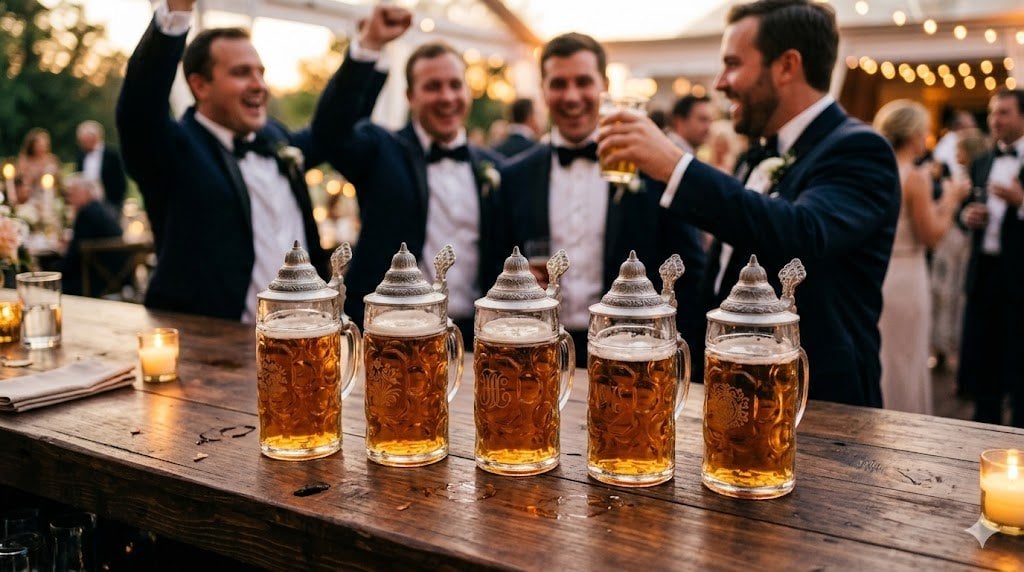
    Groomsmen gifts have to balance two things: be personal enough that each guy feels seen, and uniform enough that the photo of the lineup looks good. Engraved steins solve both. Same shape across the set, each one customized with the groomsman’s name and wedding date. They photograph well at the rehearsal dinner and quietly keep working as a memento for years.

    3. Oktoberfest Souvenirs

    Anyone who’s been to a real Bavarian Oktoberfest comes home with a stein. The custom version — engraved with the year, the city, and the group — turns a generic souvenir into something specific to that trip. Order for the group ahead of time and you’ve got group merchandise that doesn’t get tossed.

    4. Milestone Birthdays (30, 40, 50)

    Milestone birthdays want something more permanent than balloons. A stein engraved with the year, a name, and a short inscription (a favorite quote, an inside joke, a date) gives the recipient something to hold up at the party and keep on display after. It scales for one person or a whole friend group buying together.

    5. Father’s Day

    Father’s Day is the gift category where novelty mugs go to die. The reason a stein works better: it suggests something about how the gift-giver sees the recipient. Tools and bottle-openers are functional; a stein is ceremonial. It says we wanted you to have something nice to hold while you sit on the porch, which lands harder than a tie.

    6. Beer Club / Brewery Memberships

    Microbrewery loyalty programs and beer-of-the-month clubs use steins as the high-end membership perk. Engraved with the club logo and the member’s name, the stein doubles as branding (it’s visible every time the member uses it) and as a thank-you for a multi-year commitment.

    7. Fraternity & Alumni Events

    Greek life and alumni associations use steins for the same reason they use class rings: it’s a physical marker of belonging that ages well. Engraved with letters, chapter name, and graduation year, a stein placed on a desk or shelf becomes a conversation piece for life.

    8. Corporate Holiday Gifts

    Most corporate holiday gifts go in a drawer. Steins don’t, because they have a clear use: holding beer at home. Combine the company logo with the recipient’s name on the back and you have a gift that gets used, not stored. Watch the unit cost — bulk orders past 50 units typically run $35–50 each.

    9. Wedding Welcome-Bag Centerpieces

    For weddings with a German or beer-culture theme — Oktoberfest weddings, Bavarian destinations, beer-garden receptions — steins double as the welcome-bag centerpiece. Engraved with the couple’s name and the date, they replace the standard thanks for coming bottle of water with something guests actually keep.

    10. Just Because, for Someone Who Cares About Their Beer

    The hardest gift category is the just because gift for someone who has refined taste. A stein lands because it’s specific without being precious — it suggests you know they like good beer, but you’re not picking a bottle for them. The engraving makes it personal; the form makes it timeless.

    What ties all ten occasions together is the same thing: a custom-engraved stein moves from a generic gift to a marker of a moment. The engraving makes it personal; the form makes it durable enough to keep marking that moment for decades. Browse our custom-engraved beer stein designs to find the right shape and engraving style for whichever occasion you’re working on.

  • Beer Stein History 101: From Bavarian Tradition to Your Bar

    Beer Stein History 101: From Bavarian Tradition to Your Bar

    Most objects on your bar shelf are there because they’re convenient. The beer stein is there because of a 14th-century public health crisis, a regional pride movement, and several hundred years of craftsmen who refused to make anything boring.

    The Plague Origin Story

    The lidded beer stein traces back to the bubonic plague era in Central Europe. Authorities in several German regions, watching disease spread alongside flies and contaminated food, began requiring that food and drink containers be covered. The earliest steins were essentially mugs with a hinged lid you could flip up with your thumb — keeping flies out of the beer and helping reduce disease transmission in crowded beer halls.

    The thumb lever wasn’t a design flourish. It was a public health requirement that became permanent because it turned out to be genuinely useful.

    Why Bavaria Became the Stein Capital

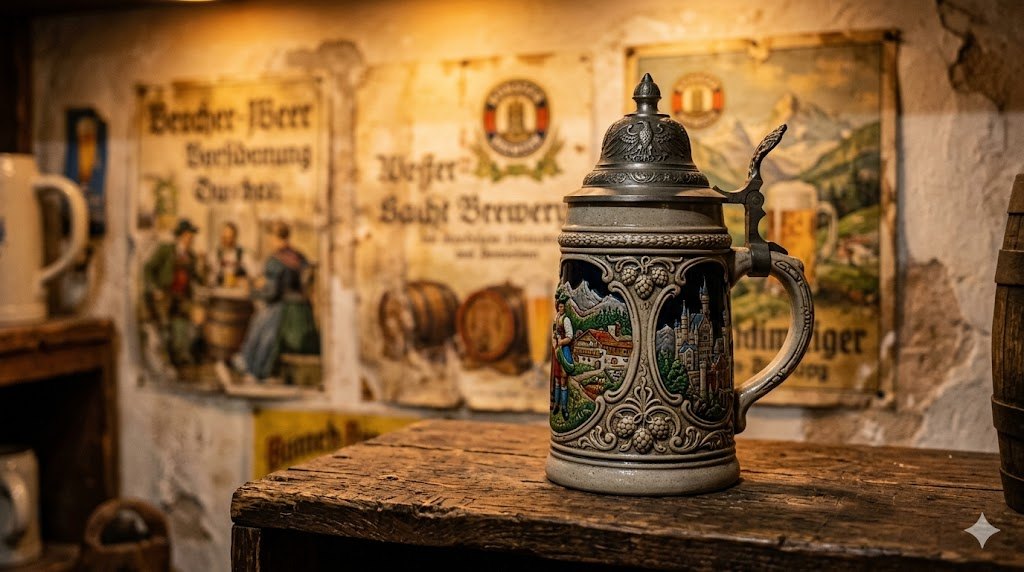
    Bavaria already had the raw materials: clay deposits for ceramic, pewter for lids, glass-making expertise, and a beer-drinking culture going back to monastic brewing traditions. Once lids became mandatory, regional craftsmen turned a regulation into an art form. By the 16th and 17th centuries, steins were being produced as both everyday drinkware and as commemorative objects — wedding pieces, guild membership steins, military regiment steins, and souvenirs.

    Materials: Ceramic, Glass, Pewter, and More

    • Ceramic. Dense, durable, kept beer cool, and held detailed relief decoration.
    • Glass. Became popular as glassmaking advanced. Let drinkers see the beer.
    • Pewter. Standard lid material — heavy enough to stay shut, easy to cast in detail, food-safe.
    • Porcelain. Used for more decorative or higher-end pieces in the 18th and 19th centuries.

    The Stein Becomes a Symbol

    By the 19th century, steins had moved beyond utility. They became gifts, commemoratives, awards, and souvenirs. Guilds gave steins to members on completion of apprenticeships. Military regiments commissioned engraved steins for departing soldiers. Couples received wedding steins. Cities sold tourist steins decorated with local landmarks.

    Why the Tradition Translated to the U.S.

    German immigration in the 19th and early 20th centuries brought stein culture to the United States — to Milwaukee, Cincinnati, St. Louis, and dozens of smaller cities with strong German communities. American breweries adopted stein imagery for marketing. Oktoberfest celebrations spread the tradition further.

  • Corporate Awards Reimagined: Using Custom Steins for Service Milestones

    Corporate Awards Reimagined: Using Custom Steins for Service Milestones

    Walk through any corporate office and you’ll see the graveyard: rows of identical glass plaques on a credenza, employee-of-the-month certificates fading in a frame, crystal obelisks with old logos. These items were meant to honor people. Instead they became furniture. As HR and culture teams rebuild recognition programs for a hybrid workforce, a smaller and more unexpected award is showing up on desks and home offices: the custom-engraved beer stein.

    [ IMAGE PLACEHOLDER — Gemini Imagen prompt: “An engraved glass beer stein with a corporate logo and 10-year milestone inscription sitting on a modern home office desk, soft natural light, photorealistic, shallow depth of field.” ]

    Why Traditional Awards Stopped Working

    Plaques, glass blocks, and engraved pens were designed for a different workplace. The recipient sat at the same desk for thirty years. The award lived on the office wall. Everyone who walked by saw it.

    That model is gone. Many employees now split time between home and office, change roles every few years, and bring far less personal decor into shared workspaces.

    The Case for Steins as Service Awards

    A custom stein clears a different bar. It’s:

    • Useful at home. It works for beer, coffee, pencils on a desk, or just shelf decoration.
    • Visible in personal space. Recipients put it where they spend real time, not just where HR can see it.
    • Distinctive. Most companies aren’t doing it yet, so the gift stands out.
    • Genuinely engravable. Unlike a flat glass plate, a stein has a substantial wraparound surface that supports detailed engraving — logos, dates, names, even short messages.

    Structuring a Stein-Based Milestone Program

    For service awards (1-year, 5-year, 10-year, 20-year), a tiered approach works well:

    • Year 1: A smaller mug or half-liter stein with the company logo and employee name.
    • Year 5: A standard glass stein with pewter lid, employee name, hire date, and tagline.
    • Year 10: A larger or ceramic stein with custom engraving and a personalized message.
    • Year 20+: A premium piece — handcrafted ceramic, intricate engraving, individualized motif.

    Logistics: Lead Time, Budget, and Bulk Orders

    • Lead time. Bulk custom orders need four to eight weeks depending on volume and engraving complexity.
    • Volume pricing. Per-unit cost drops significantly above 25 units.
    • Engraving variations. Most production processes allow per-unit name and date variation without cost blow-up.
    • Packaging. A solid presentation box matters more than people admit.

    If you’re putting together a multi-tier program, our corporate awards collection is a good starting point.

  • Groomsmen Gift Guide: Why Engraved Beer Steins Beat the Same Old Flask

    Groomsmen Gift Guide: Why Engraved Beer Steins Beat the Same Old Flask

    If you’ve been to more than a couple of weddings, you already know the routine. The groom hands out matching flasks at the rehearsal dinner, everyone grins for a photo, and within six months most of those flasks are buried in a sock drawer next to a tangled phone charger. There’s a better way to thank the people standing next to you on the biggest day of your life, and it’s been sitting in beer halls for about 500 years.

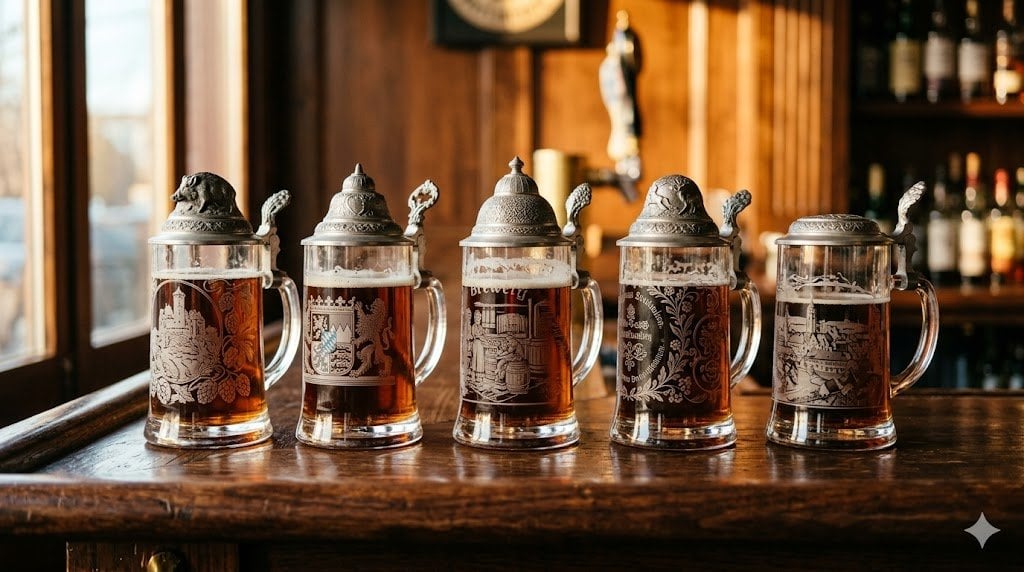
    Engraved glass beer steins with pewter lids on dark walnut bar

    The Flask Problem Nobody Talks About

    Flasks have a niche. They’re small, they’re discreet, and they’re occasionally useful at a tailgate. But for most groomsmen, that’s the entire use case. The leather peels, the engraving fades because it’s on a thin metal plate, and the inside picks up a metallic smell that’s almost impossible to clean out. Many grooms find that a few years after the wedding, the only flask still in regular rotation is the one belonging to the friend who genuinely drinks bourbon straight. For everyone else, it’s a memory wrapped in plated steel.

    A gift’s real value isn’t what you paid for it. It’s how often it gets pulled out of the cabinet.

    Why Steins Land Differently

    An engraved beer stein hits a different register. It’s substantial in the hand. It holds a full pint and then some, which is the actual volume most people drink. It looks great on a shelf when it’s not in use, so it doesn’t get exiled to storage. And because steins have a centuries-old association with celebration, friendship, and toasts, the symbolism actually matches what you’re trying to say to your groomsmen.

    We’ve also noticed something practical: groomsmen who get steins tend to use them at home, at game nights, and at the next round of bachelor parties. The gift keeps circulating instead of getting shelved.

    What to Engrave (Beyond the Obvious Initials)

    The default is initials and a wedding date. That’s fine. But the steins guys actually brag about usually have something a little more personal. A few ideas that land well:

    • The groomsman’s nickname, especially the one only the group uses
    • An inside joke rendered as a fake coat of arms or motto
    • The location and date of the wedding, plus a short toast line
    • Each groomsman’s role (Best Man, Officiant, Ring Bearer Wrangler)
    • A simple monogram on the front with the wedding details discreetly on the back

    If you’re ordering for a larger party, mixing personalization across a consistent template keeps the set feeling cohesive without being identical.

    [ CHART PLACEHOLDER: Bar chart — "Average years in active use" comparing flasks, glassware sets, engraved steins, and cufflinks [SOURCE: George to confirm data or replace with a directional infographic]. — to be replaced with actual chart graphic ]

    Practical Considerations Before You Order

    A few things to think about before you click order on a set of eight:

    • Lead time. Custom engraving takes longer than stock retail. Order at least four to six weeks before you want them in hand, earlier if your wedding is in peak season.
    • Sizing. Half-liter steins are the most versatile. Full-liter steins are impressive but a lot of glass to lift on a casual Tuesday.
    • Lidded or open. Lidded steins look more traditional and travel better. Open mugs are easier to drink from at a party.
    • Material. Glass is the most popular and shows off engraving cleanly. Ceramic feels more old-world. Pewter lids upgrade either one.

    If you’re not sure where to start, our stein collection groups options by size, material, and lid style so you can compare quickly.

    [ IMAGE PLACEHOLDER — Gemini Imagen prompt: "Close-up of a hand lifting a personalized engraved beer stein in a toast, rustic wedding reception background blurred behind, cinematic warm lighting, photorealistic." ]

    Budget vs Memorable: They’re Not the Same Thing

    Many grooms try to keep groomsmen gifts under a specific number, which is reasonable. But a $30 flask that gets forgotten and a $55 stein that gets used for the next decade have very different cost-per-use math. When clients tell us they wish they’d done something different, it’s almost never “I wish I’d spent less.” It’s usually “I wish I’d picked something they’d actually keep.”

    The same logic applies to engraving. Skipping personalization to save a few dollars per piece is the move that turns a thoughtful gift into a generic one.

    Bringing It All Together

    A wedding party is a thank-you list rendered in tuxedos. The gift should match that. Engraved steins are heavier, more memorable, and more useful than the alternative, and they age into the kind of object guys actually hand down. That’s a tall order for a piece of barware, but it’s the bar steins have cleared for centuries.

  • Hello world!

    Welcome to WordPress. This is your first post. Edit or delete it, then start writing!